


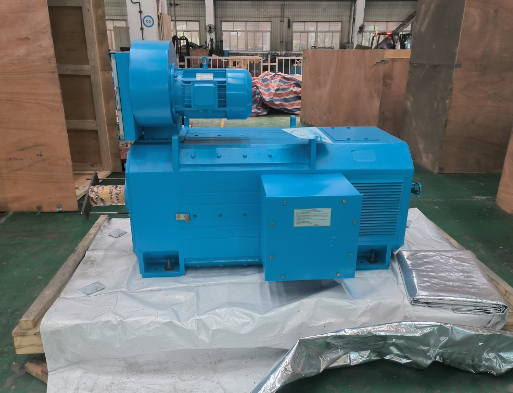


SIMO: How to reduce the loss of YE3 motor?
When electrical energy is converted into mechanical energy, the low-voltage motor itself will also lose part of the energy. LT SIMO motor takes you to understand the loss of the motor. The loss of YE3 motor can be divided into three parts: variable loss, fixed loss and stray loss.
- Variable loss varies with the load, including stator resistance loss (copper loss), rotor resistance loss and brush resistance loss.
- Fixed loss is independent of the load, including core loss and mechanical loss. The core loss consists of hysteresis loss and eddy current loss, which are proportional to the square of the voltage and inversely proportional to the frequency.
- Other stray losses are mechanical losses and other losses, including friction loss of bearings and windage loss caused by the rotation of the fan and rotor

A. Stator loss
The main methods to reduce the 1^2R loss of the YE3 motor stator are as follows:
- Under the same stator outer diameter, increasing the cross-sectional area of the stator slot will reduce the magnetic circuit area and increase the magnetic density of the tooth.
- For low-voltage small YE3 motors, increase the full slot ratio of the stator slot. The full slot rate of the stator can be increased by adopting better winding and insulation size and larger conductor cross-sectional area.
- The end loss of the stator winding accounts for 1/4~1/2 of the total winding loss. Reducing the length of the end winding can improve the efficiency of the YE3 motor. Experimental results show that the end length is reduced by 20% and the loss is reduced by 10%.
B. Rotor loss
The 1^2R loss of the YE3 motor rotor is mainly related to the rotor current and rotor resistance. The corresponding energy-saving methods are as follows:
- The rotor current can be reduced from two aspects: increasing the voltage and increasing the power of the YE3 motor;
- Increase the cross-sectional area of the rotor slot;
- For the YE3 motor, it makes more sense to reduce the resistance of the rotor winding (such as using thick wire and low-resistance material) because small motors are usually cast aluminum rotors. If a cast copper rotor is used, the total loss of the motor can be reduced by 10%-15%. However, the manufacturing temperature of the cast copper rotor is very high, the technology has not yet been popularized, and its cost is 15%-20% higher than that of the cast aluminum rotor.
C. Core loss
The iron loss of the motor can be reduced by the following measures:
- In order to reduce the magnetic flux density, increase the length of the iron core to reduce the magnetic flux density.
- For example, the thickness of the silicon steel sheet can be reduced by using cold-rolled silicon steel sheet instead of hot-rolled silicon steel sheet, but the thin iron chips will increase the number of iron chips and the cost of motor manufacturing.
- Use cold-rolled silicon steel sheet with good conductivity to reduce hysteresis loss.
- Use high-performance iron chip insulation coating.
- Heat treatment and manufacturing technology, the residual stress after iron chip processing will seriously affect the loss of the motor. When processing silicon steel sheet, the cutting direction and punching shear stress have a great influence on the iron loss. Cutting along the rolling direction of silicon steel sheet and heat treating silicon steel sheet can reduce the loss by 10%~20%.
D. Stray loss
At present, the understanding of stray loss of YE3 AC motor is still in the research stage
- Heat treatment and finishing are used to reduce rotor surface short circuit.
- The inner surface of the rotor slot is insulated.
- Improved the design of stator winding to reduce harmonics.
- By improving the matching design and matching of rotor slots, increasing stator and rotor slots, designing rotor slots into skew slots, and using sinusoidal windings, dispersed windings and short pitch windings in series, high-order harmonics can be greatly reduced. By using magnetic gap mud or magnetic gap wedges instead of traditional insulating gap wedges, and filling the gaps of the stator core of the motor with magnetic gap mud, it is an effective way to reduce additional stray losses.
E. Wind friction loss
Wind friction loss accounts for about 25% of the total loss of the motor and should be paid attention to. Friction loss is mainly caused by bearings and seals, and friction loss can be reduced by the following measures:
- The size of the shaft should be reduced as much as possible, but it should meet the requirements of output torque and rotor dynamics.
- Use high-efficiency bearings.
- Use efficient lubrication systems and lubricants.
- Use advanced sealing technology.