


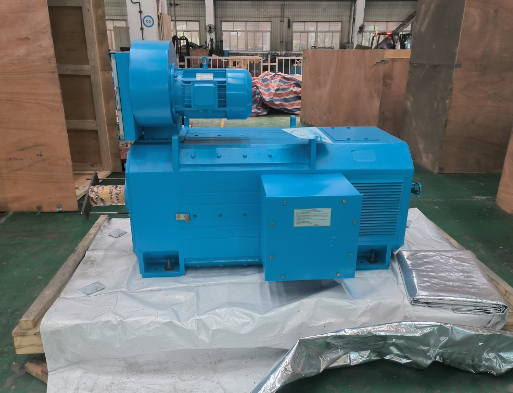


Why are motors more likely to burn out now than before?
- Why are motors more likely to burn out now than before?
Due to the continuous development of insulation technology, the design of motors requires both increased output and reduced volume, making the thermal capacity of new motors smaller and smaller, and the overload capacity weaker and weaker; and due to the improvement of production automation, motors are required to run frequently in various modes such as frequent starting, braking, forward and reverse rotation, and variable load, which puts higher requirements on motor protection devices. In addition, motors have a wider range of applications and often work in extremely harsh environments, such as humid, high temperature, dusty, corrosive, etc. Coupled with the irregularities in motor repair and the omissions in equipment management. All of these have caused today's motors to be more easily damaged than in the past.
- Why is the protection effect of traditional protection devices not ideal?
Traditional motor protection devices are mainly fuses and thermal relays. Fuses are the earliest and simplest protection devices. In fact, fuses are mainly used to protect power supply lines and reduce the expansion of fault range in the event of short-circuit faults.
It is unscientific to think that the fuse can protect the motor from short circuit or overload, and to select the fuse according to the rated current instead of the starting current of the motor. However, it is more likely to damage the motor due to phase failure.
Thermal relay is the most widely used motor overload protection device. However, the thermal relay has a single function, low sensitivity, large error, and poor stability, which has been recognized by the majority of electrical workers. All these defects make the motor protection unreliable. This is indeed the case; although many equipments are equipped with thermal relays, the phenomenon of motor damage affecting normal production is still common.
- Ideal motor protector?
The ideal motor protector is not the one with the most functions, nor the so-called most advanced, but the most practical. So what is practical? Practicality should meet the elements of reliability, economy, convenience, etc., and have a high performance-price ratio. So what is reliable?
Reliability should first meet the reliability of the function, such as overcurrent and phase failure functions must be able to reliably operate for overcurrent and phase failure in various occasions, processes, and methods.
Secondly, the reliability of the protector itself (since the protector is to protect others, it should have high reliability) must have adaptability, stability and durability to various harsh environments. Economical: adopt advanced design, reasonable structure, professional and large-scale production, reduce product costs, and bring extremely high economic benefits to users. Convenience: It must be at least similar to thermal relays in terms of installation, use, adjustment, wiring, etc., and be as simple and convenient as possible. It is precisely because of this that relevant experts have long predicted that in order to simplify electronic motor protection devices, a design without power supply transformer (passive) should be designed and adopted, and semiconductors (such as thyristors) should be used instead of electromagnetic actuators with contacts. In this way, it is possible to manufacture a protection device composed of the least number of components. We know that active will inevitably bring unreliability. One needs working power for normal operation, and the other will lose working power when the phase is broken. This is a contradiction that cannot be overcome at all.