


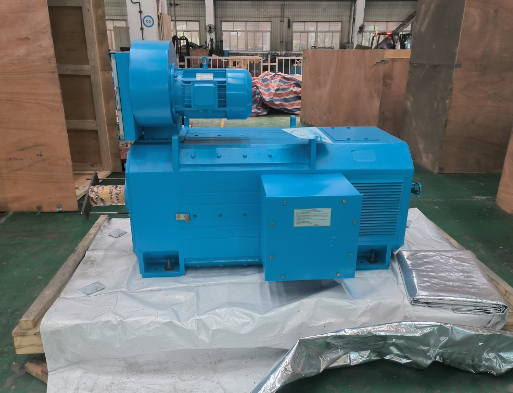


What are the difficulties faced by the update of high-efficiency and energy-saving motor equipment?

Economic pressure of equipment update
When enterprises update their equipment, the first difficulty they face is the problem of funds. Taking large special steel enterprises as an example, the cost of updating a production line or some key equipment is very high, and raising enough funds is a major challenge. In addition, the steel market is highly volatile and demand is difficult to predict. Making decisions to update equipment in an unstable market environment increases the risk of investment. Equipment updates often require shutdowns or reductions, which will affect the production and sales of products and cause economic losses.
Shortage of technical talents
In addition to funding issues, the update of high-efficiency and energy-saving motor equipment also faces the challenge of a shortage of technical talents. Equipment update is not just about replacing equipment, but also requires compound talents who understand both manufacturing and emerging technologies to make accurate judgments on production line transformation and promote the overall upgrade of production capacity. In the automotive industry, the survey found that the industry is very active in "embracing" change and accelerating the transformation of software and hardware in terms of intelligence, but there is a large gap in compound talents who understand both automobile manufacturing and intelligence, which has become a key "blocking point" in technological transformation.
Incentives from policies and market confidence
Despite the above difficulties, enterprises and experts generally believe that government policy support and market confidence incentives are crucial to promoting equipment renewal. To attract enterprises to renovate equipment around energy conservation and carbon reduction, not only policy and financial support are needed, but also the confidence of enterprises in the market needs to be improved, the incentive mechanism needs to be linked to actual business development, and fairness needs to be emphasized to drive investment enthusiasm from the root.
Recycling of used motors
In the process of updating high-efficiency and high-quality asynchronous induction motor equipment, the recycling of used motors is also an important issue. Every year, a large number of old and inefficient motors in my country face retirement or elimination, and recycling needs to be further strengthened. The "Guidelines for the Implementation of Motor Renovation and Recycling" clarifies the work objectives and puts forward requirements for strengthening the recycling, disposal, disassembly and remanufacturing of used motors, aiming to improve the level of resource recycling.
To conclude, the challenges associated with the renewal of high-efficiency and energy conservation industries fan motor equipment can be broadly categorised as follows: financial constraints, a shortage of technical expertise, a lack of market confidence and the recycling of used motors. The resolution of these issues necessitates the input of enterprises themselves, in addition to the provision of policy support and market incentives from the government.