


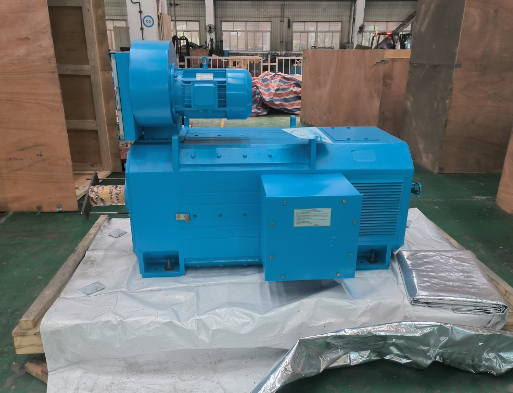


Performing advantages and application fields of high-voltage motors
High-voltage motors play an important role in modern industry, especially in high-power and long-distance transmission occasions. This article will delve into the performance advantages of High Voltage Motors and their main application areas to help users better understand the value and choice of high voltage motors.
- Working principle of high voltage motor
The working principle of the high-voltage motor is basically the same as that of the Low-Voltage Motor, and its core lies in electromagnetic induction. High voltage motors usually operate at 3KV, 6KV and higher voltages, and the main structure includes stator, rotor and insulation system. The working process is as follows:
Stator winding: The stator winding of the high-voltage motor is wound with multi-coil insulated copper wire, which can withstand high voltage. The power supply generates a rotating magnetic field through the stator winding to drive the rotor to rotate.
Rotor structure: The rotor of the high voltage motor can be a squirrel cage or winding type. Squirrel-cage rotor is widely used because of its simple structure and high reliability, which is suitable for general industrial use. The winding rotor is suitable for occasions where speed regulation or large starting torque is required.
Excitation mode: Excitation of high-voltage motors is usually achieved by self-excitation or external excitation. Self-excited high-voltage motors rely on stator windings to provide excitation current, while externally excited motors need to provide excitation current through an external power source.
- Performingadvantages of high voltage motor
Energy saving and environmental protection: High voltage motor at the same power, the current is low, which can reduce the loss of electric energy, provide higher energy efficiency, in line with the current trend of energy saving and emission reduction.
Reduce material costs: High voltage motor can work at a higher voltage, the same power of the case, the required wire cross-sectional area is smaller, thereby reducing the use of cables and insulation materials, saving production costs.
High load tolerance: The design of high voltage motors allows them to perform well in heavy start-up and operation, especially for equipment requiring high starting torque.
Smaller cable cross section: High-voltage motors can use cables with smaller cross sections because of the smaller current, which reduces the investment of cables when transmitting power over long distances.

- The main application areas of high voltage motor
High voltage motors are widely used in many industries, and their main application areas include:
Mining: In lifting, transporting and crushing equipment in mines, high-voltage motors are a key source of power, capable of stable operation in harsh environments.
Chemical and petrochemical: In chemical production, high voltage motors are used to drive various mechanical equipment, such as pumps, compressors and fans, to ensure the efficiency of the production process.
Power industry: High-voltage motors are used in power plants and substations to drive generators, transformers and other equipment to ensure the stable operation of the power system.
Water treatment: In sewage treatment plants and water pumping stations, high-pressure motors are used to drive pumps to meet the needs of large flow water transmission.
- Maintenance and maintenance of high voltage motor
In order to ensure the long-term stable operation of the high voltage motor, regular maintenance and maintenance is very important. Here are some key points of high voltage motor maintenance:
Insulation inspection: Regularly check the insulation material of the motor to ensure that it is in good working condition to prevent failures caused by insulation failure;
Temperature monitoring: When the high voltage motor is running, the temperature of the motor is continuously monitored to ensure that it is within a safe range and prevent damage caused by overheating.
Cleaning and maintenance: Keep the motor outside and ventilation system clean, prevent dust and debris hinder heat dissipation, affecting the motor performance.
Lubrication management: Periodically check and replace motor lubricating oil to reduce friction and wear and extend motor life.
Through scientific maintenance measures, users can ensure the efficient operation of high-voltage motors and reduce the frequency of failures.
With its superior performance and wide application, high voltage motor has become an indispensable power equipment in modern industry.