




0102030405
News

Carbon Brush Wear: Why Your DC Motor is "Eating" Brushes Faster Than Usual
2026-05-07
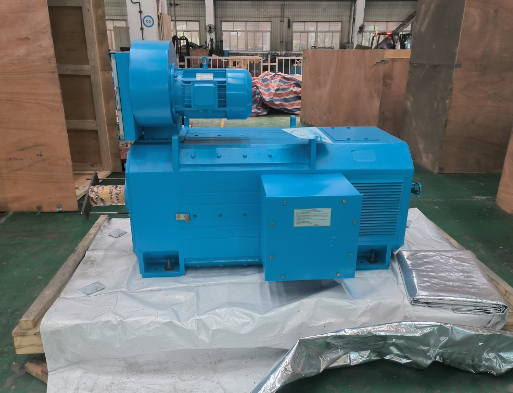
Is your DC motor "eating" brushes? Rapid wear is often a symptom of a deeper issue rather than a bad brush. Discover the 4 most common technical causes and how to prevent costly commutator damage.

What Is the Difference Between Impregnated and Non-Impregnated Motor Windings?
2026-04-28
Varnish impregnation is a critical step in the insulation treatment of motor windings, followed by a curing process via drying. This raises the question: Is it acceptable to leave motor windings unimpregnated? The fundamental differences between impregnate...
view
detail

Why does a motor exhibit a "shuddering" phenomenon at the instant of startup or power disconnection?
2026-04-28
During motor testing, if variable voltage or variable frequency starting methods are employed, the motor's startup process tends to be relatively smooth and balanced. Conversely, when the motor is started using its normal operating voltage, a relatively di...
view
detail
Salt Spray Corrosion Test: Ensuring Product Durability in Marine Environments
2026-04-20
Marine and coastal equipment is often exposed to harsh corrosive environments, where the corrosion resistance of product enclosures and fasteners directly affects the service life, safety and operational stability of the equipment. To effectively evaluate the corrosion resistance performance of related components and ensure the quality and reliability of products in marine service environments, the salt spray corrosion test has become a core quality inspection link. This test simulates the actual marine corrosive environment, focuses on testing the corrosion resistance of product enclosures and fasteners, provides scientific and reliable data support for product quality control, and lays a solid foundation for the stable operation of marine-related projects.

Typical Maximum Torque Multiplier for High-Voltage Slip-Ring Motors Driving Crushers
2026-04-09
When selecting high-voltage slip-ring motors for crushers, maximum torque ratio (Tmax/Tn) is one of the most critical performance indicators. Crushers, especially jaw crushers, cone crushers and impact crushers, feature highly fluctuating loads, potential he...
view
detail

Does Rotor Voltage of High-Voltage Slip-Ring Motors Vary with Rated Power?
2026-04-08
For high-voltage wound-rotor (slip-ring) motors, rotor voltage does change with rated power—but not in direct proportion. It is a design parameter determined by power, speed, stator voltage, and winding configuration.
Key Relationships
Larger elect...
view
detail

Thermal Logic in Motor Specs: Why a Higher Service Factor Demands Premium Insulation
2026-04-03
Explore the technical link between Motor Service Factor and Insulation Class. Learn why increasing S.F. requires Class H upgrades to prevent thermal aging and winding failure.

How to Ensure 100% Interchangeability for High-Voltage Motor Replacement?
2026-03-31
Avoid costly downtime during HV motor replacement. Learn the 4 critical steps to ensure 1:1 interchangeability, from mounting dimensions to terminal box alignment.

Can Variable Frequency Speed Control of Electric Motors Achieve High Efficiency and Energy Savings?
2026-03-23
The operation of electric motors using variable frequency speed control has gradually become a defining symbol of the modern era. In the context of synchronous motors, this speed control method specifically refers to the application of AC variable frequenc...
view
detail
